


You’re holding a raw chicken breast in one hand and a cutting board in the other, and the trash pull-out is right there at your knee. There’s no handle. So you nudge it with your hip, and nothing happens. You nudge harder. The drawer flies open and smacks your shin.
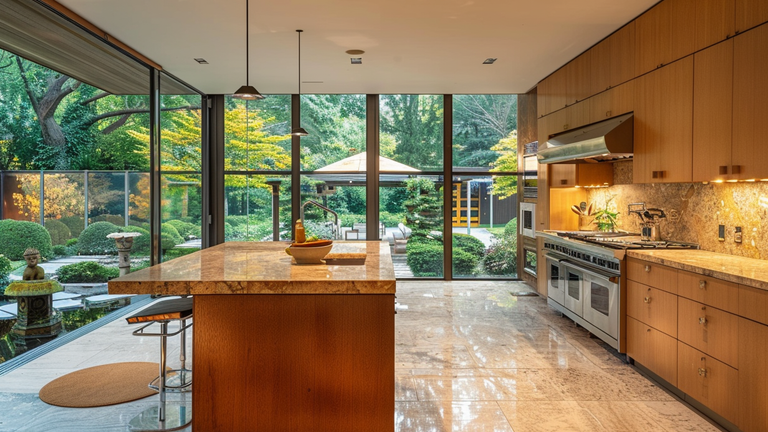
That little scene is the whole debate over handleless design in one moment. Flat, uninterrupted fronts are among the most popular looks in modern kitchen cabinets right now, and for good reason. They’re calm, clean, and photograph beautifully. But a kitchen is a workroom, not a gallery.
So before you fall for a wall of smooth doors, it’s worth knowing how they open, what they cost you in daily habits, and which version fits the way you actually cook.
Why Handleless Fronts Look So Good
Handles are visual punctuation. Twenty-four pulls across a run of cabinets create twenty-four little dots your eye has to process. Take them away and the room reads as one long, quiet surface. Small kitchens feel bigger. Open-plan kitchens blend into the living space instead of shouting “appliance zone.”
There’s a practical upside too. Nothing sticks out, so nothing snags your sweater pocket or catches a toddler at forehead height. Kitchen designer Anne Ellard, writing for Houzz, pointed to exactly that safety benefit, along with the clean, effortless look her clients love.
She also argued the style is hard to date, since there’s no trendy hardware to give away the year you remodeled. Brass knobs from 2019, anyone?
How Doors Open When There’s Nothing to Grab
“Handleless” is a bit of a fib. Every cabinet needs some way to open. The question is where the grip is hiding. There are four main approaches, and they behave very differently in real life.
J-pull and finger-pull profiles
A J-pull is a groove routed into the top or side edge of the door itself, shaped like the letter J in cross section. You hook your fingertips in and pull. Homebuilding & Renovating notes that J-pull doors need shadow gaps between them so your fingers can reach the groove. Finger-pull profiles work the same way, except the grip is a slim aluminum strip fitted to the door edge instead of a channel cut into the panel.
These are usually the friendliest on your budget and the simplest to install. The catch is depth. Houzz points out that J-grooves tend to be shallow, which is not great news for big hands or long nails. The thin lip of material left behind the groove can also chip over time, so build quality matters a lot here.
Rail systems (true handleless)
This is the look you see in high-end European showrooms. A continuous recessed aluminum channel, often called a C-channel or a Gola-style profile, runs horizontally between the countertop and the top drawer, and between the drawers below. An L-shaped version sits under the countertop. You reach into the channel and grip the back of the door.
The doors stay perfectly flat, which is the whole appeal. Because you’re grabbing the back edge, you rarely touch the front, so fingerprints stay down. The trade-offs? The rails are fitted on site after the boxes are set, which takes skilled labor, and the alignment has to be precise or the shadow lines look wobbly. The channels also catch crumbs and dust, so they need a regular wipe.
Push-to-open hardware
No grooves, no channels. You press the front and it pops open. Two big hardware makers dominate this space.
Blum’s TIP-ON is a mechanical system that opens a handleless front with a single push. You close it by pressing it shut again. Blum says it still works fine if someone pulls the door open by its edge instead, which is handy when guests can’t figure it out. Hettich’s Push to open Silent does the same job for drawers and adds a soft, quiet close.
Hettich says it can be tuned for release sensitivity and opening force, and its product page rates the drawer version for loads up to 70 kg. That matters, because a drawer full of cast iron behaves very differently from a drawer full of dish towels.
Electric opening support
At the top of the ladder sits motorized help. Blum’s SERVO-DRIVE opens a handleless drawer with a light touch on the front. The SERVO-DRIVE flex version opens integrated fridges, freezers, and dishwashers, and SERVO-DRIVE uno is built specifically for the trash pull-out.
Remember the chicken scenario? A tap with your knee and the bin glides out. This is the version that turns handleless from “pretty” into “genuinely easier,” but it needs power at the cabinets and adds real cost.
The Daily Frustrations Nobody Puts in the Brochure
Here’s where you have to be honest with yourself about how you live.
Greasy fingers. With push-to-open, you’re pressing the face of the door, often with hands that just touched butter or raw onion. The mark lands right in the middle of the front, at eye level. J-pulls and rails move that contact to the hidden edge, which helps a lot.
Fingerprints on gloss vs. matte. High-gloss lacquer shows every smudge and needs daily attention. Standard matte paint hides more but can hold oily marks in its texture. Some specialty matte surfaces, like FENIX NTM, are marketed as anti-fingerprint, and the maker says light surface micro-scratches can be repaired with heat. If you love dark colors, this choice matters more than the door style.
Accidental pushes. Lean against a run of push-to-open base cabinets while chatting, and you may hear a polite click as a drawer opens into your thigh. Houzz flags this one directly. Kids discover it fast and treat it like a game.
Kids and pets. Speaking of kids, a door that opens with a bump is a door that opens with a small hand. Plan child locks for anything holding cleaners or knives. On the bright side, a toddler can’t easily grip a flat front with no handle.
Wet hands and weak grips. If someone in the house has arthritis or limited hand strength, shallow grooves and stiff push latches can be a daily irritation. A chunky handle is simply easier to grab when your hands are wet.
The integrated dishwasher. A panel-fronted dishwasher has no latch for push-to-open to work against in the usual way. Your options are a J-pull or rail at the top, an appliance-specific opener like SERVO-DRIVE flex, or a dishwasher with its own knock-to-open feature. Sort this out with your designer early, before the panel is ordered.
What It Costs (Without Making Up Numbers)
Prices swing wildly by region, material, and installer, so treat this as a ranking rather than a quote. From least to most expensive, you’ll usually see:
- J-pull or finger-pull doors, since the grip is part of the door itself
- Mechanical push-to-open hardware, which adds a fitting to every door and drawer
- True handleless rail systems, which need extra labor on site and precise alignment
- Electric opening support, which adds motors, wiring, and outlet planning
The thing people forget: handleless is rarely the cheap option. You’re swapping a box of pulls for routing, profiles, special hardware, or labor. Ask for a quote on the same layout with standard handles so you can see the real gap.
Mixing Methods: The Designer’s Trick
You don’t have to pick one system for the whole room. Most of the best handleless kitchens quietly combine two or three.
A common, very livable setup looks like this. Use a rail system on the base drawers, where you open things dozens of times a day with messy hands. Use push-to-open on upper cabinets, where a channel would look odd and you’re less likely to brush against them.
Put electric opening on the trash pull-out and maybe the dishwasher, the two spots where your hands are most often full. Tall pantry doors can take a vertical rail or a side J-pull.
If you’re comparing finishes and door styles to see how these combinations look in a real space, browsing a range of modern kitchen cabinets is a smart way to train your eye before you meet a designer. Seeing a flat matte drawer next to a rail profile in person tells you more than ten mood boards.
Who Should Go Handleless, and Who Should Skip It
Handleless suits you if you love a minimal, architectural look and you’re willing to wipe fronts a bit more often. It works well in open-plan homes where the kitchen faces the living room. It’s also a strong fit if you’re investing in quality hardware anyway, since cheap push latches are where most complaints start.
You might want to skip it, or at least soften it, if you cook heavy every night with oily hands, if someone at home struggles with grip strength, or if you’re renting the house out and need fronts that survive anybody. Budget-tight projects also tend to do better with good-looking pulls than with bargain handleless hardware that sticks after a year.
There’s a middle path, too. Slim edge pulls or integrated tab handles give you most of the clean lines with a real, honest grip. Plenty of people choose this after test-driving a showroom and realizing they don’t love pressing doors.
Modern Kitchen Cabinets FAQ
Do handleless cabinets show more fingerprints?
It depends on the opening method and the finish. Push-to-open puts your fingers on the front, so marks show up more. J-pulls and rail systems move contact to the hidden edge. High gloss shows the most smudges, and specialty anti-fingerprint matte surfaces show the least.
Can push-to-open cabinets have soft-close?
Yes. Older push latches and soft-close dampers used to fight each other, but newer systems are designed for both. Hettich’s Push to open Silent, for example, opens with a press and closes gently and quietly.
Are handleless kitchens harder to clean?
Flat fronts are easy to wipe. Rail channels and J-grooves collect crumbs and dust, so give them a quick pass with a damp cloth or a vacuum brush every week or so.
Will a handleless kitchen go out of style?
Nobody can promise that about any design. Flat, simple fronts have been popular for decades, though, and they don’t rely on hardware trends that date a room quickly.
The Honest Verdict
Handleless cabinets are neither a scam nor a miracle. They’re a design choice with a learning curve. Done cheaply, with shallow grooves and flimsy push latches everywhere, they really can turn into a daily frustration.
Done thoughtfully, with rails where your hands are messy, push-to-open where you barely reach, and a little motorized help on the trash bin, they’re beautiful and easy to live with.
So test before you commit. Open real drawers in a showroom, ideally with your hands a little greasy (just ask first). Picture your busiest Tuesday night. If the doors still make you smile, go for it. If you’re already annoyed, a slim pull might be the best modern kitchen cabinets decision you ever make.


