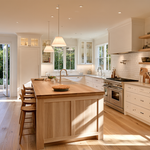
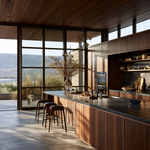


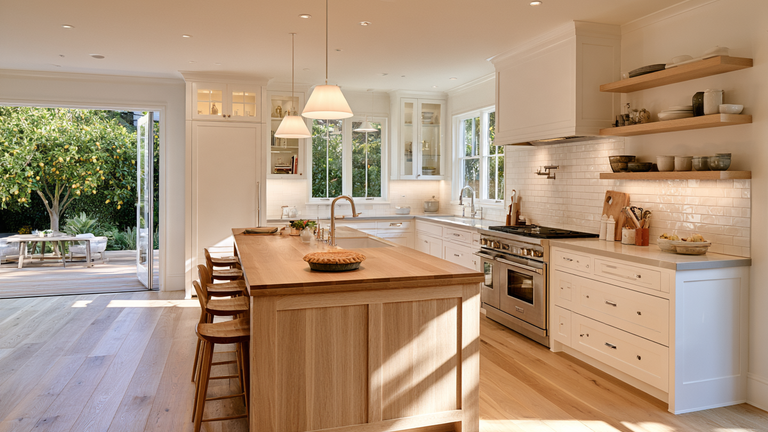
White cabinets are bright, clean, and easy to love, but on their own they can feel a little chilly. The fastest fix is wood. A walnut island, a few oak shelves, or a butcher block counter can turn a crisp white room into one that feels relaxed and lived in. If you already have white kitchen cabinets, or you’re planning them, a smart dose of wood is the easiest way to make the space feel like home instead of a showroom.
The trick is knowing which white to pick, where the wood should go, and when to stop adding it. Let’s walk through all of it, from paint chips to cutting boards.
Start With the Right White
Not all whites play nicely with wood. Every white paint has an undertone, a faint hint of another color that shows up next to other materials. Wood is full of yellow, orange, and red, so the white you choose will either cozy up to it or argue with it.
Warm Whites
Warm whites carry a touch of yellow or cream. They make wood look rich and intentional, almost like the two were meant to be together.
Two popular warm picks, plus one crisp white for comparison:
- Benjamin Moore White Dove (OC-17): A soft, classic white with a gentle warmth. Benjamin Moore lists its light reflectance value (LRV) at 83.16, so it still reads bright on cabinets.
- Sherwin-Williams Alabaster (SW 7008): A creamy white that leans a bit warmer than White Dove. Sherwin-Williams lists its LRV at about 82.
- Benjamin Moore Chantilly Lace (OC-65): This one is the crisp outlier, with a higher LRV than the two above, and many paint pros describe it as close to a true white with very little undertone.
LRV is simply how much light a color bounces back, on a scale from 0 (black) to 100 (pure white). Higher numbers feel brighter and crisper. Lower numbers feel softer.
Cool and Crisp Whites
Cool whites lean slightly blue, green, or gray. They look sharp and modern, and they can still work with wood. The difference is that the wood will look more like a bold contrast and less like a cozy partner. A very clean white such as Chantilly Lace can feel a touch cool beside honey-toned oak, so test it before you commit.
Test Before You Paint
Paint chips lie. Paint a large sample board, then hold it right next to your actual wood sample. Check it in the morning, at noon, and at night under your own lights. A white that looks perfect in the store can turn yellow or gray once it meets your flooring and your window.
Where to Add Wood in a White Kitchen
You don’t need to cover every surface in timber. A few well-placed pieces do the heavy lifting. Here are the spots that give you the most warmth for the effort.
The Island
The island is the star of most kitchens, which makes it the perfect place for wood. You can go with stained wood cabinets on the island base, a thick wood countertop, or both. White perimeter cabinets with a wood island make a classic two-tone look that rarely feels dated.
Open and Floating Shelves
Swap one or two upper cabinets for open wood shelves. Floating shelves, the kind with hidden brackets, look especially clean against a white wall or tile backsplash. They also give you a home for cookbooks and that plant you promise to water.
The Range Hood
A wood-wrapped range hood is a big, bold move that doesn’t take up any extra space. It also breaks up a long run of white nicely.
Butcher Block Counters
Butcher block brings warmth right to the spot where your hands spend the most time. Use it everywhere, or save it for the island and keep stone on the perimeter.
Ceiling Beams
If your ceiling height allows it, wood beams add a cozy, farmhouse or cabin feel.
The Small Stuff
Wood stools, a cutting board leaning on the backsplash, a wood tray by the sink, fruit piled in a turned wood bowl. These small touches are cheap, easy to change, and surprisingly effective.
Matching Wood Tones to Your Whites
Here’s the fun part. Different woods have different personalities, and some pair better with certain whites.
Light Woods: White Oak and Maple
White oak and maple are pale and calm. White oak has a slightly golden or grayish cast, while maple tends to be smooth and creamy with a fine grain. Both look fresh with a crisp white like Chantilly Lace and feel soft and Scandinavian with White Dove.
Medium Woods: Red Oak, Hickory, and Cherry
These woods carry more color. Red oak has a pinkish warmth, hickory has bold grain and lots of variation, and cherry deepens to a reddish brown over time. Warm whites like Alabaster calm them down so the room doesn’t feel too busy.
Dark Woods: Walnut
Walnut is rich, chocolate brown, and dramatic. It creates strong contrast with any white, so it works with both warm and cool shades. With a clean white, walnut feels modern. With a creamy white, it feels classic and a bit luxurious.
A Simple Rule for Mixing
Try to keep your wood accents in the same family. If your floors are medium oak, a walnut island can look great because the difference is clear and on purpose. What looks off is two woods that are almost the same but not quite, like they showed up to the party in nearly matching outfits.
How Much Wood Do White Kitchen Cabinets Need?
This is where many kitchens go a little sideways. Too little wood and the room still feels cold. Too much and the white cabinets get lost.
A good starting point is to pick one big wood element and one or two smaller ones. For example, a wood island plus open shelves. Or a butcher block counter plus a wood range hood. Then add small items like stools and boards to tie it all together.
Look at the room from the doorway. Your eye should bounce from one wood piece to another across the space. If all the wood sits on one wall, the room can feel lopsided. Spread it around so the warmth feels even.
When you’re deciding how much white versus wood you want, it helps to browse a range of white kitchen cabinets in different door styles first, since a plain slab door and a detailed Shaker door can change how much wood the room needs to feel balanced.
Finishes and Care
Wood looks best when it’s protected. The finish you choose affects both the look and how much work you’ll do later.
Sealing and Oiling Butcher Block
Butcher block usually comes with one of two finishes. An oil finish soaks into the wood and lets you cut directly on it. A film finish, like varnish, sits on top and protects against water, but you shouldn’t cut on it.
For oiled butcher block, John Boos, a long-running butcher block maker, recommends oiling it regularly, roughly once a month for a board in steady use, and a dry, pale look is a good sign it’s time. Use food-grade mineral oil, wipe on a thin layer, let it soak in, and wipe off the extra.
Skip olive oil and vegetable oil. They can go rancid and leave your counter smelling like old salad dressing.
Finishes for Shelves, Hoods, and Islands
For wood that won’t touch food directly, a clear matte or satin finish keeps things looking natural. High gloss can feel a bit dated and shows every fingerprint. If you love a darker look, test stain on a scrap piece first, because the same stain looks different on oak than on maple.
Everyday Care
Wipe up spills quickly, since standing water is wood’s worst enemy. Use mild soap and a damp cloth instead of harsh sprays, and keep wood away from the direct blast of a dishwasher’s steam when you open it.
Lighting That Makes It All Glow
Lighting can make or break the white and wood combo.
Choose bulbs labeled “warm white” or “soft white.” Bright daylight bulbs can make warm whites look dingy and turn wood a bit gray. Under-cabinet lights show off butcher block and shelf grain. Pendants over a wood island add another layer of warmth, especially if the fixtures themselves have brass, wood, or woven details.
Don’t forget natural light. North-facing kitchens get cooler light, so warmer whites and medium woods help. South-facing kitchens get lots of warm sun, so a crisper white can keep things from feeling too yellow.
Common Mistakes to Avoid
Even good plans can stumble. Watch out for these:
- Picking white paint without the wood in hand. Always test them side by side.
- Too many wood tones. Two or three is plenty. Five starts to look like a lumber yard.
- Ignoring the floor. Your floor is the biggest wood surface in the room. Plan your accents around it.
- Forgetting maintenance. An unsealed wood counter next to the sink will show water damage fast.
- Going too orange. Some older stains turn wood very orange. Next to warm white, that can look dated. Lighter or more natural finishes usually look fresher.
- Treating wood as an afterthought. Plan your wood pieces early so they feel built in, not tacked on.
Frequently Asked Questions
What white paint goes best with wood accents?
Warm whites are usually the easiest match. Benjamin Moore White Dove and Sherwin-Williams Alabaster are both popular because their soft undertones blend well with most wood tones. If you want a crisper look, Chantilly Lace works too, but test it next to your wood first.
Can I mix wood tones in a white kitchen?
Yes. Just make the difference clear. A pale oak floor with a dark walnut island looks intentional. Two mid-tone woods that almost match can look like a mistake.
Is butcher block a good choice next to white cabinets?
It’s one of the warmest options you can pick. It does need regular oiling if it has an oil finish, and you should wipe up water quickly. If that sounds like too much upkeep, use it only on the island and keep a harder surface by the sink.
Will wood accents make my kitchen look smaller?
Not if you keep the balance right. Light woods like white oak and maple keep things airy. Darker woods like walnut add depth, so use them on one strong feature, like an island, rather than on every surface.
Bringing Warmth Home
White kitchen cabinets give you a bright, clean base, and wood brings the heart. Start by choosing a white that flatters your wood, then add one big wood feature and a few small ones. Match your tones with purpose, protect the finish, and pick lighting that makes everything glow.
Do that, and your kitchen will feel fresh and welcoming at the same time, the kind of room where people linger at the island long after dinner is done. Honestly, that’s the whole point. Well, that and the snacks.


